
That faint darkening above your upper lip can look like a mustache, even after you’ve removed every hair. If the skin itself looks brown or gray, melasma could be the cause, especially if the pigmentation gets more noticeable after sun exposure or during pregnancy.
But melasma isn’t the only possibility, and the right approach depends on what’s actually causing the pigmentation.
What Is a Melasma Mustache?
“Melasma mustache” is a nickname for the brown or gray-brown patches that can appear above the upper lip. It describes a common pattern of melasma, a skin condition that causes darker patches, often on the cheeks, forehead, nose, or upper lip.
Melasma happens when pigment-producing cells make too much melanin, the substance that gives skin its color. The patches often look symmetrical and tend to become more noticeable after time in the sun.
Anyone can develop melasma, but it’s more common in women and in people with medium to deeper skin tones. It can also be stubborn. Even when the pigmentation fades, it can return with sun exposure or hormonal changes.
Why Does Skin Above the Lip Get Dark?
A few factors can contribute to a melasma mustache or similar-looking pigmentation:
- Sunlight and visible light. UV rays can trigger melasma, and visible light can worsen pigmentation, particularly in deeper skin tones. The upper lip is also easy to miss when you’re applying sunscreen.
- Hormonal changes. Pregnancy and estrogen-containing birth control can trigger or worsen melasma for some people, which is why it may show up or intensify at certain times.
- Hair removal and irritation. Waxing, threading, and other hair-removal methods can irritate the skin, and that irritation can cause post-inflammatory hyperpigmentation (PIH), leaving dark marks. Hair removal doesn’t automatically cause melasma, though.
- Genetics and individual susceptibility. A family history of melasma can raise your chances, and some medications and thyroid-related factors have been linked to it too.
The cause matters, because something that helps one type of pigmentation may not suit another.
Is It Melasma or Another Type of Pigmentation?
A dark upper lip doesn’t always mean melasma. Here are some common possibilities, though a professional may need to examine your skin to tell them apart:
- Melasma: brown or gray-brown patches above the lip that may worsen with sun exposure or hormonal changes.
- Post-inflammatory hyperpigmentation (PIH): flat brown or darker marks that may follow waxing, threading, irritation, acne, or a rash.
- Hair shadow: a grayish cast where hair grows, often more noticeable after shaving or as hair grows back.
- Other pigment concerns: discoloration with a different pattern or appearance that may need a professional assessment to identify.
If the darkness showed up after a new hair-removal method or an irritating product, PIH may be contributing. If it’s a persistent patch that darkens after time outdoors, melasma is one possibility. Either way, it’s best not to rely on appearance alone.
How Can You Help Fade a Melasma Mustache?
The right approach depends on the cause, your skin’s sensitivity, and whether you’re pregnant or trying to conceive. A simple, consistent routine is a good starting point.
- Wear sunscreen daily. Use a broad-spectrum SPF 30 or higher across your upper lip. A tinted sunscreen with iron oxides also helps protect against visible light, which can worsen melasma.
- Keep skincare gentle. Avoid harsh scrubs and irritating products, since they can worsen pigmentation. Azelaic acid may help, while stronger ingredients like hydroquinone should only be used with professional guidance. If you’re pregnant or trying to conceive, check with a healthcare professional before using any pigmentation products.
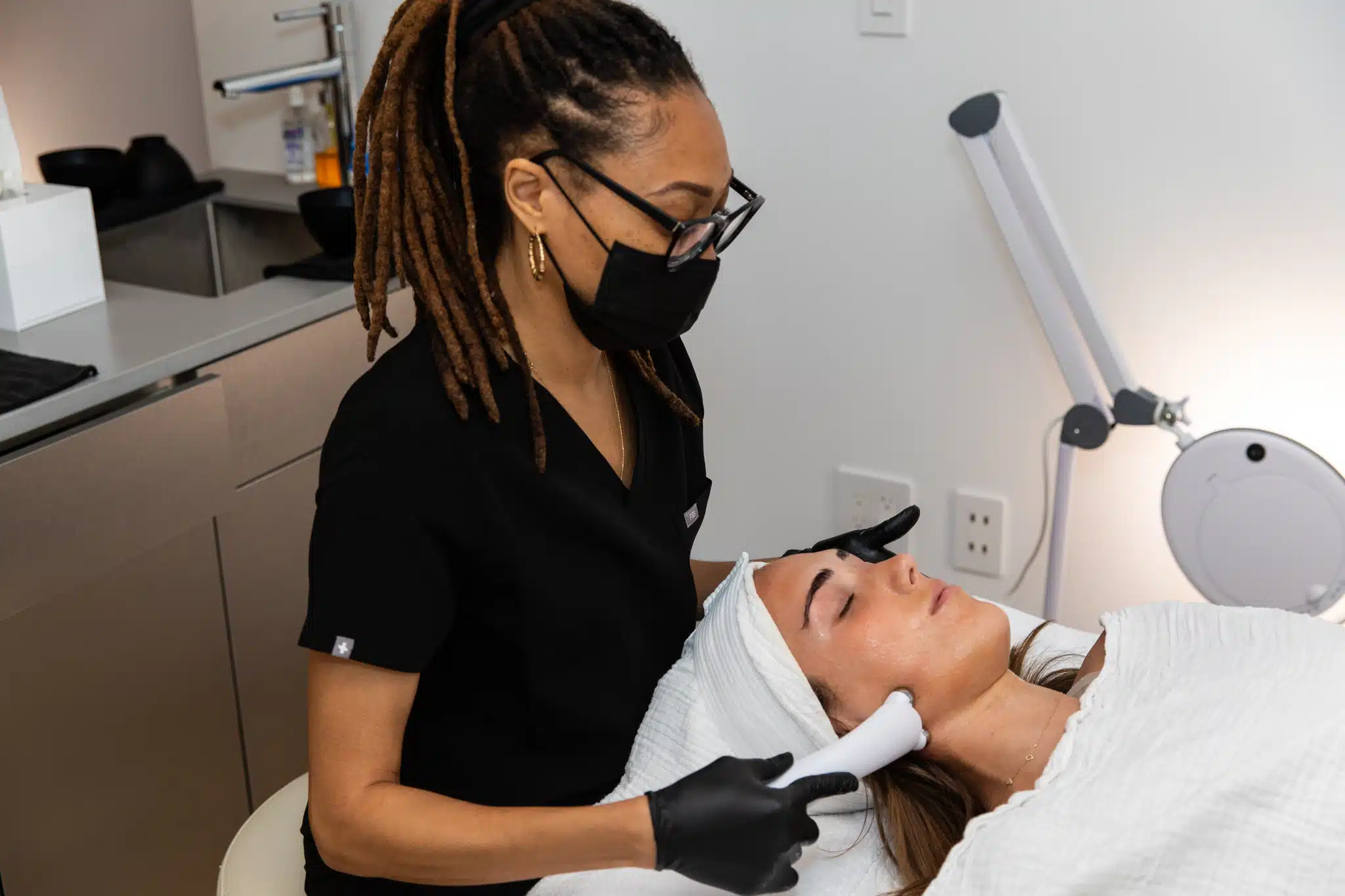
- Consider a professional facial. For brightening-focused care, our Hyperpigmentation Facial pairs gentle exfoliation with LED and vitamin C to help support a more even-looking tone over time. Your esthetician tailors it to your skin and tolerance after an assessment, which matters with pigmentation, since the right approach varies from person to person.
How Can You Keep It From Getting Worse?
Small habits help protect your skin while you work on existing pigmentation:
- Apply sunscreen carefully around the upper lip every morning, even when it’s cloudy.
- Use a hat or seek shade during long stretches outdoors.
- Choose a hair-removal method that doesn’t leave your skin irritated. If waxing or threading keeps causing dark marks, consider another option.
- Stop using any product that causes burning, redness, or peeling.
- Keep your routine simple, and give it time to work.
Melasma often takes months to improve, and it can return even after it fades. The goal is to manage the pigmentation and reduce triggers, rather than expect a permanent overnight fix.
Fade Dark Spots With Silver Mirror
Want to address a dark upper lip without guessing which option to try? Our Hyperpigmentation Facial is built around brightening and evening the look of your tone, and your esthetician can tailor it to your skin and concerns. For more on fading pigmentation generally, our guide to fading sun spots and hyperpigmentation is a good place to start.
Frequently Asked Questions
Does a melasma mustache go away after pregnancy?
Melasma may fade after pregnancy as hormone levels shift, but it doesn’t always disappear completely. Sun protection helps keep the pigmentation from getting darker in the meantime.
Can shaving make upper-lip pigmentation worse?
Shaving doesn’t directly cause melasma, but repeated irritation can contribute to post-inflammatory hyperpigmentation. Use a gentle technique and stop if your skin becomes inflamed.
Are home remedies like lemon juice safe for a dark upper lip?
Lemon juice can irritate the skin and may increase sun sensitivity. It isn’t a reliable fix for melasma and could actually make pigmentation worse.
How long does it take to fade a melasma mustache?
Improvement often takes several months, depending on the cause, your routine, and sun exposure. Melasma can recur, so ongoing sun protection is important.
Can I get a facial if I have melasma?
Often, yes, though it depends on your skin’s condition. Tell your esthetician about your pigmentation so they can tailor the facial, like our Hyperpigmentation Facial, and keep it gentle.
Was this article helpful?
Thanks for letting us know.
By