Blackheads aren’t trapped dirt, which is why scrubbing harder never clears them. Once you understand what they actually are, getting rid of them makes a lot more sense.
What Are Blackheads?
A blackhead is a clogged pore filled with oil and dead skin cells that stays open at the surface. Because the pore stays open, the trapped material is exposed to air, which is what gives a blackhead its characteristic dark top.
That open surface is the key difference between a blackhead and a whitehead. A whitehead is the same kind of congestion, but the pore stays closed over it, so the trapped material never reaches the air and stays white or flesh-colored.
Why Are Blackheads Black?
Here’s the myth-buster: the dark color comes from oxidation. When trapped oil and dead skin are exposed to air at the open pore, they oxidize and darken, the same way a sliced apple browns. It has nothing to do with dirt.
This is easily the most misunderstood fact about blackheads, and it explains why scrubbing harder doesn’t help. You’re not dealing with surface grime that a good wash will lift away, you’re dealing with oxidized material sitting inside the pore.
That’s also why no amount of washing removes the color. The dark spot isn’t on top of your skin, it’s the exposed surface of a plug sitting down in the pore, so cleansing simply can’t reach it.
What Causes Blackheads?
Blackheads come from a combination of factors that leave pores clogged and open.
Oil production and pore size. Excess sebum gives pores more to clog with, and larger pores are more prone to visible congestion in the first place. If you have naturally oily skin or larger pores, you’re simply more prone to blackheads, and that’s genetics as much as anything.
Humidity, sweat, and sunscreen. Heat and humidity ramp up oil production, sweat adds to the mix, and heavy or un-removed sunscreen can sit in the pores and contribute to buildup. This is especially relevant through NYC and Miami summers, when all of those pile up at once. (More on this in our guide to post-summer congestion.)
Products that clog: what “non-comedogenic” actually means. “Non-comedogenic” means a product is formulated not to clog pores. It matters because plenty of moisturizers, foundations, and even hair products are comedogenic, meaning they can block pores and feed blackhead formation. Checking for that label is a small habit that pays off.
Blackheads vs. Sebaceous Filaments: How to Tell the Difference
Here’s something that trips up almost everyone: many of the “blackheads” people fight are actually sebaceous filaments, which are a completely normal part of the pore.
Sebaceous filaments are tiny, uniform, grayish dots, usually on and around the nose, that channel oil to the skin’s surface. Everyone has them, and they’re supposed to be there. Blackheads, by contrast, are darker, more distinct, and represent an actual clog.
This is the number one reason people “fail” to remove blackheads that were never blackheads to begin with. You can’t extract your way out of normal pore anatomy, and trying to only irritates the skin. If it comes back within a day looking exactly the same, it’s very likely a sebaceous filament, not a blackhead.
What Doesn’t Work (and Why)
Do pore strips work? Pore strips only grab debris sitting at the very surface of the pore. They don’t clear the pore or address what’s causing the congestion, so whatever they pull off comes right back. Over-using them can also irritate the skin and stretch the pore, which makes things look worse over time, not better.
Does washing more often help? No. Over-washing doesn’t remove oxidized oil, since that’s sitting down inside the pore, and it can strip and irritate your skin. Ironically, that irritation can push your skin to produce more oil, worsening the very congestion you’re trying to clear. Cleansing morning and night is the sweet spot.
Why squeezing at home causes scarring. At-home squeezing damages the skin, drives inflammation, and can lead to scarring and post-inflammatory hyperpigmentation, the dark marks that outlast the blackhead by months. The pressure often pushes some of the clog deeper rather than clearing it, too.
What Actually Works: Professional Extractions
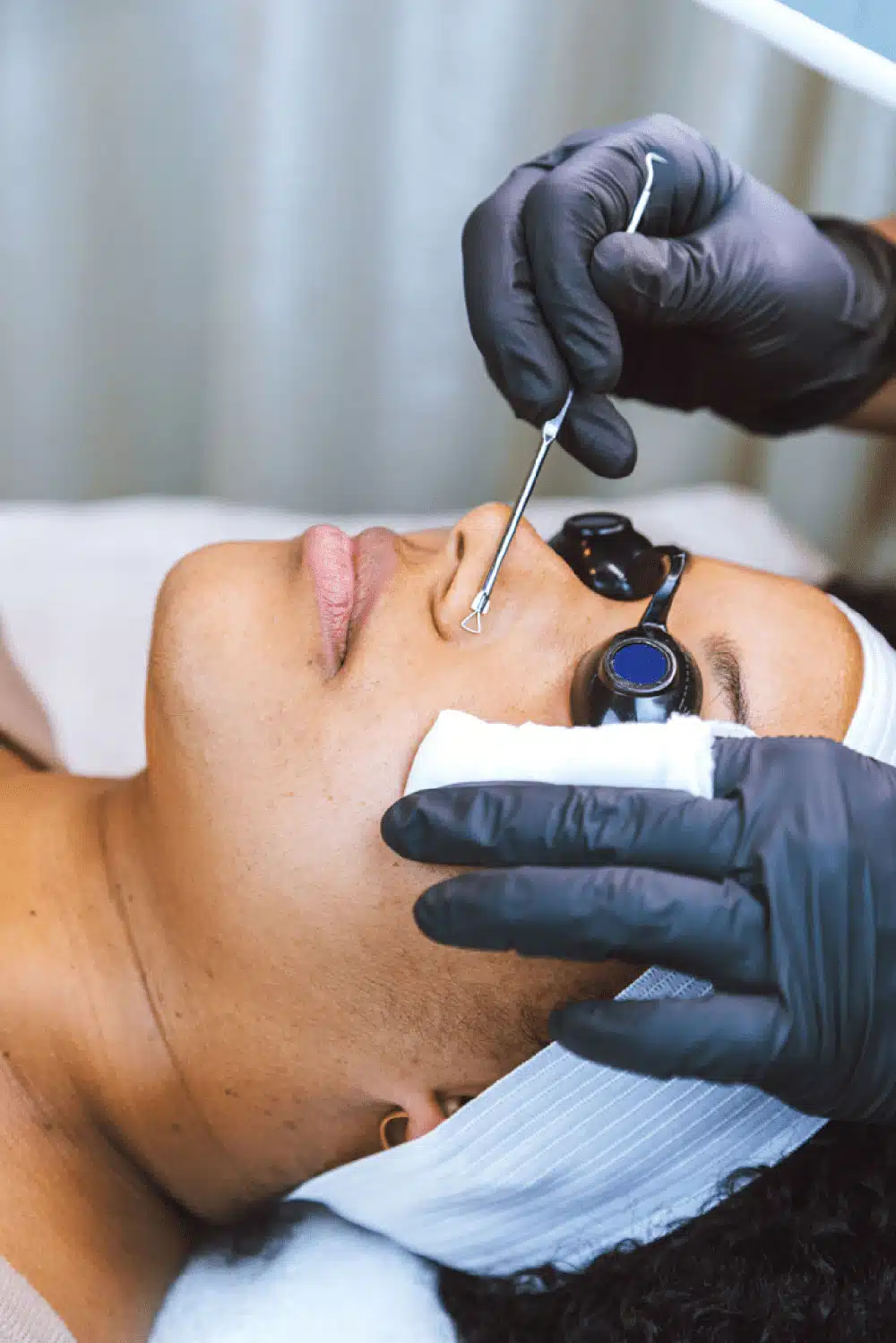
The effective, safe way to clear blackheads is professional extractions, which remove the congestion at its source without the collateral damage of DIY attempts.
At Silver Mirror, extractions are part of our Acne-Fighting Facial ($169), and for skin that needs more dedicated clearing, the Extra Extractions add-on ($25) builds in extra time. A professional extraction isn’t just squeezing done by someone else, it’s a prepared, controlled process designed to protect your skin while it clears. You can book the Acne-Fighting Facial here.
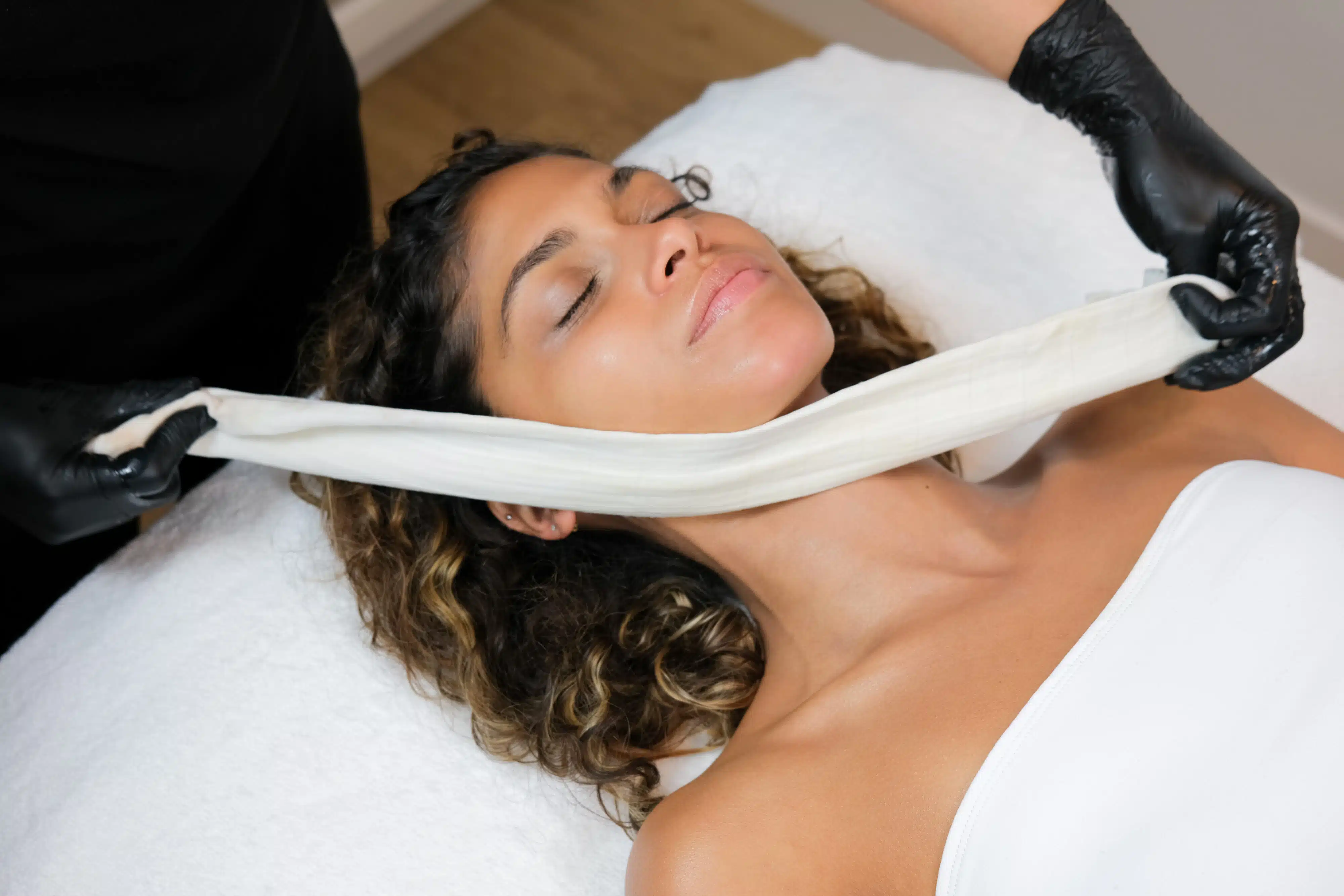
What happens during an extraction. Your esthetician starts by cleansing and prepping the skin, then softens the pore, often with steam or warm towels, so the congestion can release without force. From there, they gently clear the pore using proper technique and sterile tools.
How it feels, and what redness to expect afterward. You may feel mild pressure or slight discomfort, particularly around the nose, but it shouldn’t be sharp or painful. Some temporary redness afterward is normal and usually settles within a few hours.
How often to come in. A regular monthly cadence keeps congestion under control, since it matches your skin’s renewal cycle and stops buildup from having time to accumulate.
Building a Routine That Keeps Them From Coming Back
Extractions clear what’s there; a good routine keeps new blackheads from forming.
- Cleanse gently, morning and night, to clear away daily buildup without over-stripping
- Choose non-comedogenic products so you’re not feeding congestion
- Exfoliate gently and consistently to support cell turnover, without overdoing it
This is the prevent-and-correct approach: you prevent buildup with consistent home care and correct existing congestion with regular professional treatment. Neither does the whole job alone, but together they keep blackheads genuinely in check.
Frequently Asked Questions
Are blackheads caused by dirt?
No. The dark color is oxidized oil and dead skin, not dirt, so blackheads aren’t a sign that your skin is unclean. Scrubbing harder won’t remove them.
Do pore strips get rid of blackheads?
Pore strips only remove debris at the surface of the pore. They don’t clear the pore fully or prevent blackheads from returning, and overuse can irritate and stretch the skin.
Is it bad to squeeze blackheads at home?
Yes. At-home squeezing risks irritation, scarring, and post-inflammatory hyperpigmentation. Clearing them is best left to a professional who can do it safely.
How do I know if it’s a blackhead or a sebaceous filament?
Sebaceous filaments are small, uniform, grayish, and a normal part of the pore, usually on the nose. Blackheads are darker and more distinct, and represent an actual clog rather than normal pore function.
How often should I get professional extractions?
A regular monthly cadence works well for most people, though your esthetician will personalize it to your skin. Consistent visits keep congestion from building back up.
Can blackheads be removed permanently?
Not permanently. Blackheads can be managed and noticeably reduced with consistent care, but pores naturally produce oil, so the goal is ongoing control rather than a one-time fix.
Keep Blackheads Under Control With Silver Mirror
Blackheads are oxidized congestion, not dirt, and they don’t respond to scrubbing, pore strips, or squeezing. What actually works is professional extractions to clear them at the source, paired with a consistent routine to keep them from returning.
If blackheads have been a persistent frustration, our estheticians can clear them safely and help you build a routine that keeps them in check. Book a facial with a Silver Mirror esthetician to get started.
Was this article helpful?
Thanks for letting us know.
By