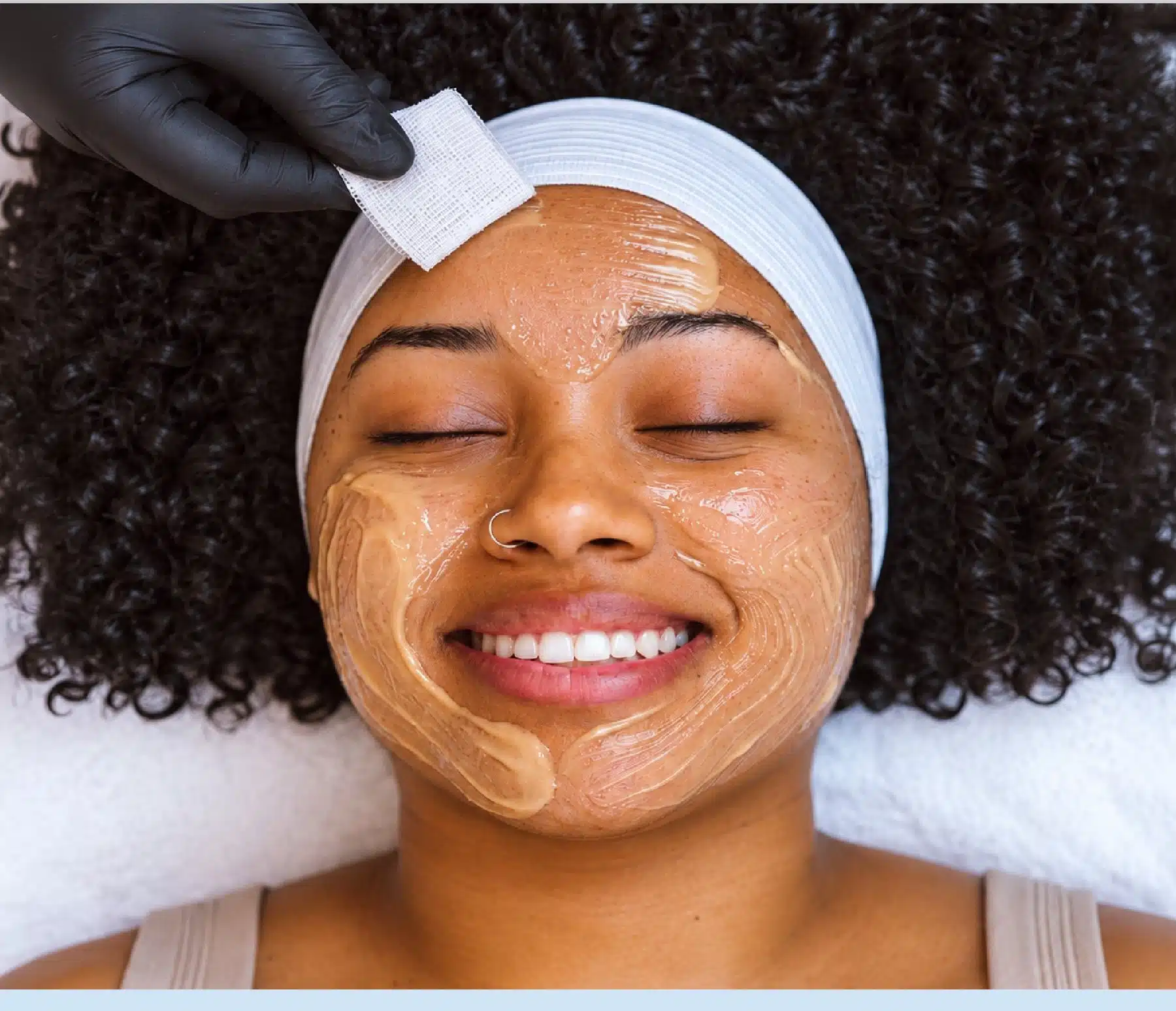
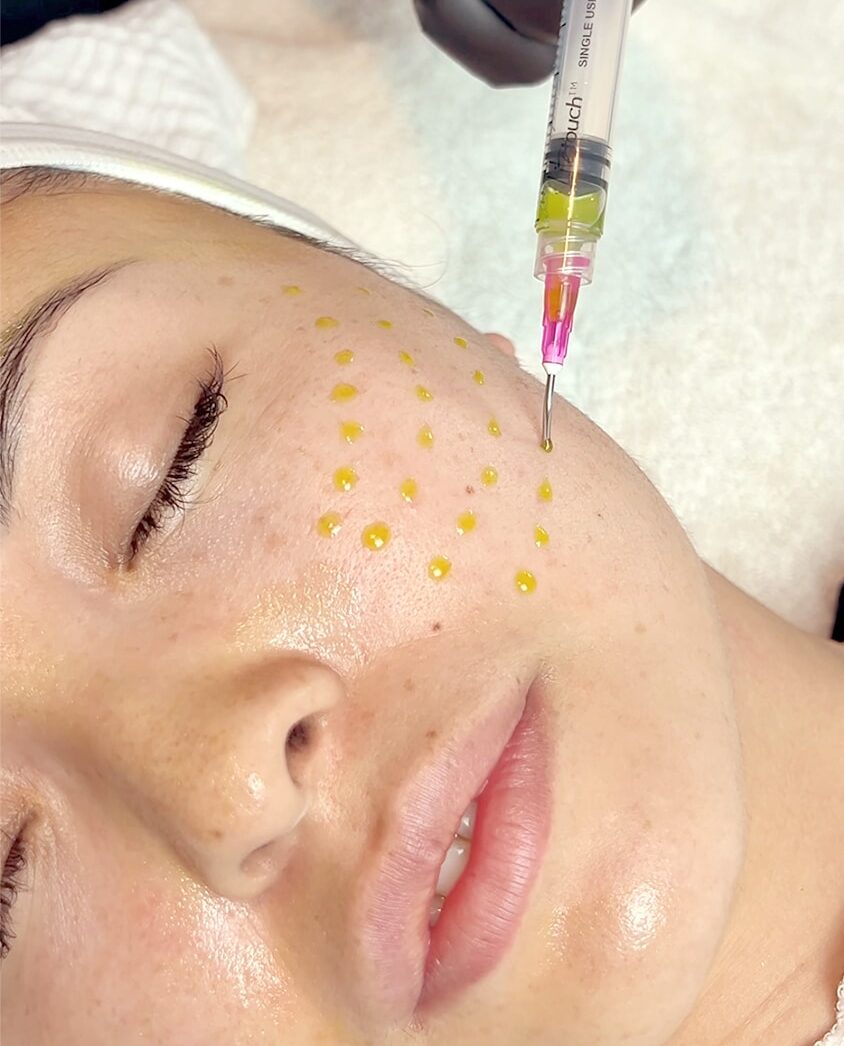
Yes, BioRePeel is safe to use in summer. It’s non-photosensitizing, which means it doesn’t increase your skin’s sensitivity to the sun the way many traditional peels do.
You’ve probably heard that chemical peels and summer don’t mix. For a long time that was solid advice, because older, aggressive peels left skin raw, flaking, and far more vulnerable to sun damage, which is the last thing you want in July. But that rule was written for a different kind of peel.
BioRePeel is a modern, two-phase treatment that delivers real results with little to no downtime, which makes it one of the few peels genuinely well suited to the sunniest months of the year. Below, we cover what BioRePeel is, why it’s summer-safe, what it treats, what to expect, and how our estheticians customize it to your skin.
What Is BioRePeel?
BioRePeel is a two-phase, TCA-based chemical peel that pairs exfoliating acids with nourishing ingredients, rather than relying on exfoliation alone. That second phase is what sets it apart from older peels.
It essentially works in two directions at once. One phase renews the skin through exfoliation, while the other supports hydration and barrier health. You’re getting the resurfacing benefit without stripping the skin in the process.
That balance is exactly why it’s effective without being overly aggressive, and it’s part of why it’s often well tolerated by sensitive skin. You’ll also hear it described as a “no-peel” peel, because most people experience little to no visible flaking afterward.
Why Most Chemical Peels Are a Summer Problem
To understand why BioRePeel is different, it helps to know what makes conventional peels tricky in summer.
Traditional peels often increase photosensitivity, leaving freshly treated skin more vulnerable to sun damage right when the sun is strongest. That’s a genuine concern, not just caution.
There’s also the visible peeling and downtime. Flaking, redness, and a few days of hiding out aren’t ideal when your calendar is full of beach days, weddings, and time outdoors. And when aggressive exfoliation meets strong summer sun, the risk of post-inflammatory hyperpigmentation, those stubborn dark marks, goes up.
BioRePeel was designed to sidestep these specific drawbacks, which is what makes a summer peel possible in the first place.
Why BioRePeel Is Safe in Summer
The core reason BioRePeel can be performed safely year-round, peak summer included, is its non-photosensitizing formula.
What makes it summer-friendly:
- A non-photosensitizing formula that doesn’t increase sun sensitivity
- Little to no visible peeling, so there’s minimal downtime during an active season
- Amino acids and vitamins that support and protect the skin barrier rather than compromise it
- A lower risk of post-inflammatory hyperpigmentation when paired with daily sunscreen
One important caveat: summer-safe doesn’t mean sun protection is optional. Daily broad-spectrum SPF is still essential, both to protect your results and to look after your skin generally. A summer peel and diligent SPF go hand in hand.
What BioRePeel Can Treat
BioRePeel is versatile, which is part of its appeal. It can help with several of the skin concerns that tend to surface in warm weather.
It may help with:
- Dullness and uneven texture
- Acne and congestion
- Redness from inflammation
- Early signs of aging
- Hyperpigmentation, with proper preparation and professional guidance
Results often start to show within a few days and continue improving over the following weeks, which is why it works so well as part of a longer plan rather than a one-off.
How Silver Mirror Customizes BioRePeel
BioRePeel at Silver Mirror is never a cookie-cutter treatment. Every session starts with an assessment and is tailored to your skin’s condition, your history, and your tolerance, because the same peel that suits one person can be too much for another.
For sensitive or reactive skin, common adjustments include:
- Reduced contact time with the peel solution
- Fewer layers applied
- Targeted application that avoids reactive or compromised areas
- Extended intervals between sessions
For some guests, BioRePeel is introduced gradually as part of a longer-term plan, where steady progress is the goal rather than any disruption to daily life. Your esthetician will map the right pace for your skin.
What to Expect During and After Treatment
During the treatment, most people feel mild warmth or a light tingling. It’s generally comfortable, and your esthetician will check in with you throughout.
Afterward, a typical experience looks like:
- Temporary redness that usually subsides within hours
- Little to no visible peeling
- Brighter, smoother-looking skin within a few days
It’s worth setting realistic expectations here. BioRePeel is recommended as a series of three treatments spaced about seven days apart, and the best results build across that series rather than appearing all at once after a single session.
Summer Aftercare That Protects Your Results
Aftercare matters with any peel, and it matters even more in summer, when sun and heat can quietly undo your results if you’re not careful.
Recommended aftercare:
- Gentle cleansing only
- Avoiding exfoliants and retinoids for at least one week
- Daily broad-spectrum SPF, reapplied through the day
- Consistent use of a barrier-repair moisturizer and a hydrating serum to balance the skin and limit flaking
That last point is where hydration earns its place. Keeping skin well hydrated after a peel supports a smoother, more even result, which is exactly what our Hyaluronic+ Gel Serum is designed to help with. Applied while your skin is still damp and sealed in with moisturizer, it helps keep skin comfortable as it renews.
Who Should Avoid BioRePeel
Even gentle treatments have limits, and a professional consultation is what determines whether BioRePeel is right for you. It’s generally not recommended if you:
- Are pregnant or breastfeeding
- Have active skin infections, open wounds, or compromised skin
- Have a known allergy to any peel ingredients
- Are currently using isotretinoin, or have within the last six months
- Have uncontrolled rosacea, eczema, or dermatitis in the treatment area
- Are experiencing a severe flare or barrier disruption
If any of these apply to you, mention it during your consultation. Your esthetician will let you know whether BioRePeel is a fit or whether another approach makes more sense for your skin right now.
Frequently Asked Questions
Is BioRePeel safe to get in the summer?
Yes. BioRePeel is non-photosensitizing, which means it doesn’t increase your skin’s sun sensitivity the way traditional peels can, so it’s safe year-round. Daily broad-spectrum SPF is still essential to protect your results.
Does BioRePeel make your skin peel?
Most people see little to no visible peeling, which is why it’s often called a “no-peel” peel. Any flaking that does happen is usually mild and easy to manage.
Do I still need sunscreen after BioRePeel?
Yes. Daily broad-spectrum SPF is essential to protect freshly treated skin and maintain your results, especially in summer. Reapply through the day when you’re outdoors.
How often can you get BioRePeel?
It’s typically done as a series, with spacing between sessions, and your esthetician will personalize the cadence to your skin. At Silver Mirror, a series of three treatments spaced about a week apart is the general recommendation.
Get Your Summer Glow With BioRePeel at Silver Mirror
BioRePeel delivers the benefits of a chemical peel without the downtime or sun restrictions that make traditional peels a summer no-go. It’s resurfacing that fits around your life rather than interrupting it.
As with everything we do, our approach is customized and expert-led. Every peel is tailored to your skin and to the season, so you get results without the guesswork. If you want brighter, smoother skin without putting your summer plans on hold, this is one of the best ways to get there.
Book a BioRePeel, or if you’d like guidance first, book an Esthetician’s Choice facial and your esthetician will assess your skin and recommend the right approach.
Was this article helpful?
Thanks for letting us know.
By